



4 Ways Top Engineers Build Unforgettable Reputations
Top engineers build unforgettable reputations by combining strong technical skills with four key behaviors: active listening, clear communication, solution-oriented problem solving, and cross-team collaboration. These habits shape how teammates, leaders, and clients experience working with them, and why they repeatedly get called back for the next big project.
Recruiting clients with complex, high-stakes programs has revealed a consistent truth: the engineers who leave lasting impressions offer more than technical expertise. They inspire confidence, simplify collaboration, and distinguish themselves through clarity, reliability, and the ability to elevate those around them.
At Game 7, our recruiters consistently hear the same feedback: the best engineers make hard work look easy. Their secret isn’t found in any schematic or library; it’s in the behaviors that shape how others experience working with them.
Here are four ways our top engineers build reputations that follow them from project to project.
The Quiet Skill That Speaks Volumes: Active listening
How does active listening help engineers stand out?
Active listening isn’t just passive silence. It’s deliberate engagement: absorbing details, asking clarifying questions, and reflecting before responding. The framework is simple—focus fully, paraphrase what you’ve heard, confirm shared meaning, and then respond with purpose. Practiced consistently, active listening becomes one of the most powerful ways to stand out on any project.
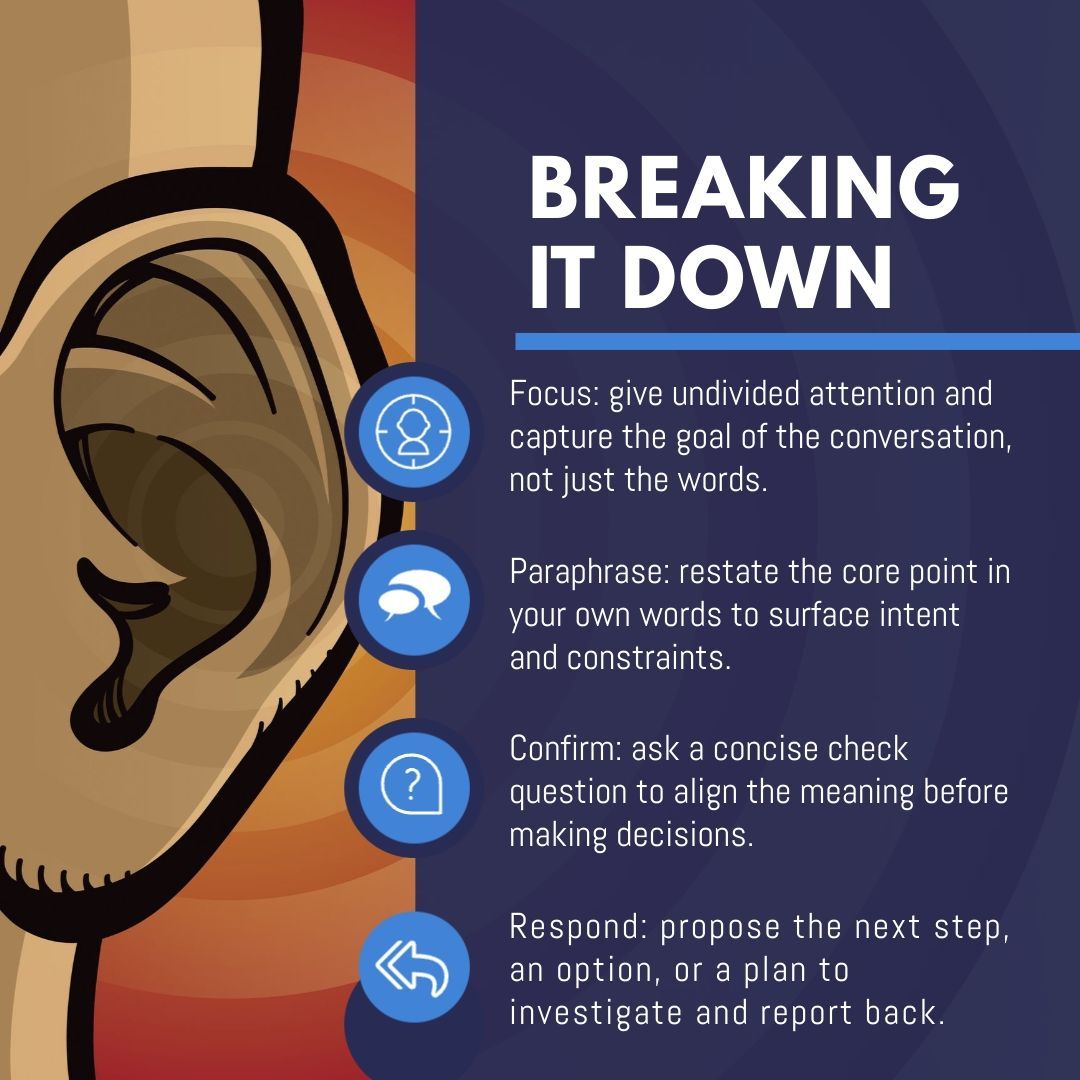
Breaking It Down:
- Focus: give undivided attention and capture the goal of the conversation, not just the words.
- Paraphrase: restate the core point in your own words to surface intent and constraints.
- Confirm: ask a concise check question to align the meaning before making decisions.
- Respond: propose the next step, an option, or a plan to investigate and report back.
Imagine you’re in a cross-functional design review with mechanical, electrical, and firmware leads. The mechanical lead points out that a small enclosure change could affect connector clearance on the board. Instead of moving on, you pause and say: “I’m hearing that the new enclosure tolerance could shift connector alignment. If that’s right, the risk is a fit issue at assembly. Can we confirm the tolerance range and schedule a short follow-up to review the board edge and standoff stack?” That thirty-second loop replaces debate with alignment—and can save hours of retesting later.
Active listeners don’t wait for direction—they make space for others, create clarity, confirm it, and keep the team moving.
SAY LESS MEAN MORE
How can engineers communicate more clearly at work?
Clear communication fosters shared understanding across roles and perspectives. It’s the ability to tailor information to leaders, peers, partners, and developing teammates, ensuring every message lands with intent. Technical fluency means little if it’s inaccessible to those who need to act on it.
For seasoned engineers, this skill appears in design reviews, handoffs, and client updates. With leadership, aim for clarity, impact, and focused decisions. With peers and cross-functional teams, pursue alignment and shared responsibility. When mentoring, provide context and a clear next step. Every audience hears things differently; engineers who adapt their tone and timing earn trust throughout the organization.
Clarity shapes perception. It determines how others describe you when you’re not in the room, and that’s the foundation of reputation.
LEAD WITH THE FIX
How do solution-oriented engineers build better reputations?
Problems are inevitable. The engineers who stand out are those who show up with solutions. They present alternatives, outline tradeoffs, and map next steps so teams can make informed choices quickly. This blend of initiative and balance defines a personal brand that clients respect and recruiters remember.
A solution-oriented engineer does more than flag an issue. They frame it with a clear problem statement; surface likely causes and suggest straightforward ways to test what’s happening. They outline options and tradeoffs, identify the best choice, and propose the next step—complete with owner and timeline. This turns noise into direction and strengthens trust.
Every contract has its unknowns. Those who navigate them with composure and creativity build reputations that outlast any statement of work.
THE STRONGEST CIRCUITS CLOSE THE LOOP
Why does cross-team collaboration matter for an engineer’s career?
Engineering has never been more integrated. Hardware needs firmware. Verification depends on design. Systems rely on collaboration. The best engineers use this overlap to build relationships that amplify their influence and resilience.
Cross-team collaboration isn’t just networking; it’s curiosity and reciprocity. When a firmware engineer joins a hardware debug session to understand context, or a design engineer involves validation early, these gestures build cross-functional trust. Over time, that trust becomes career durability. When new programs launch, these engineers are the first calls — because everyone knows how well they bridge gaps.
In an industry where projects change faster than org charts, the relationships you build are your true continuity plan. Collaboration today becomes an opportunity tomorrow.
the bottom line
Reputation isn’t built through a single milestone; it’s the sum of thousands of moments where professionalism meets personality. Those who listen actively, communicate clearly, offer solutions, and build meaningful relationships don’t just complete contracts; they shape the environments they enter and raise the standard for everyone around them.
These are engineers’ clients who ask for them by name. They also know that partnering with a recruiter who understands their discipline isn’t just helpful, it’s strategic.
Frequently asked questions about engineering reputation
Why does reputation matter so much for engineers?
Your reputation influences which projects you’re trusted with, who asks for you by name, and how often you get brought back for new opportunities. In both contract engineering and full-time roles, reputation can accelerate your career faster than any single title.
How can I start improving my reputation on my current project?
Focus on small, consistent behaviors: listen actively in meetings, communicate clearly about status and risks, show up with proposed next steps when problems arise, and close the loop with the people who depend on your work. These habits compound quickly.
What communication habits separate top engineers from the rest?
Top engineers restate what they’ve heard to confirm understanding, tailor their explanations to the audience, and highlight tradeoffs instead of just presenting a single option. They make it easier for others to make good decisions - making them a desired contract engineering candidate again and again.
How do engineers build strong reputations across multiple teams or clients?
They invest in cross-team relationships, join discussions outside their immediate scope, and share context generously. Over time, more people experience them as reliable collaborators, which leads to more referrals and invitations to future contract engineering work.
What should I do when something goes wrong on a project?
Lead with the fix instead of hiding the problem. Clearly explain what happened, outline likely causes, present options with tradeoffs, and propose a recommended path with owners and timelines. This builds trust even in tough moments.
Can a staffing partner help me build a stronger professional reputation?
A specialized staffing partner can match you with environments where your strengths shine and share feedback from clients about how you’re perceived. At Game 7, we use that input to help engineers refine the behaviors that make them unforgettable to hiring managers.