



Blogs

Learn why contract engineers ramp faster than full-time hires, when it matters most in semiconductors and hardware, and how Game 7 helps de‑risk your roadmap.

Place contract FPGA engineers - RTL designers, verification engineers, and firmware specialists - at semiconductor and defense firms. Fewer resumes. Best fit.
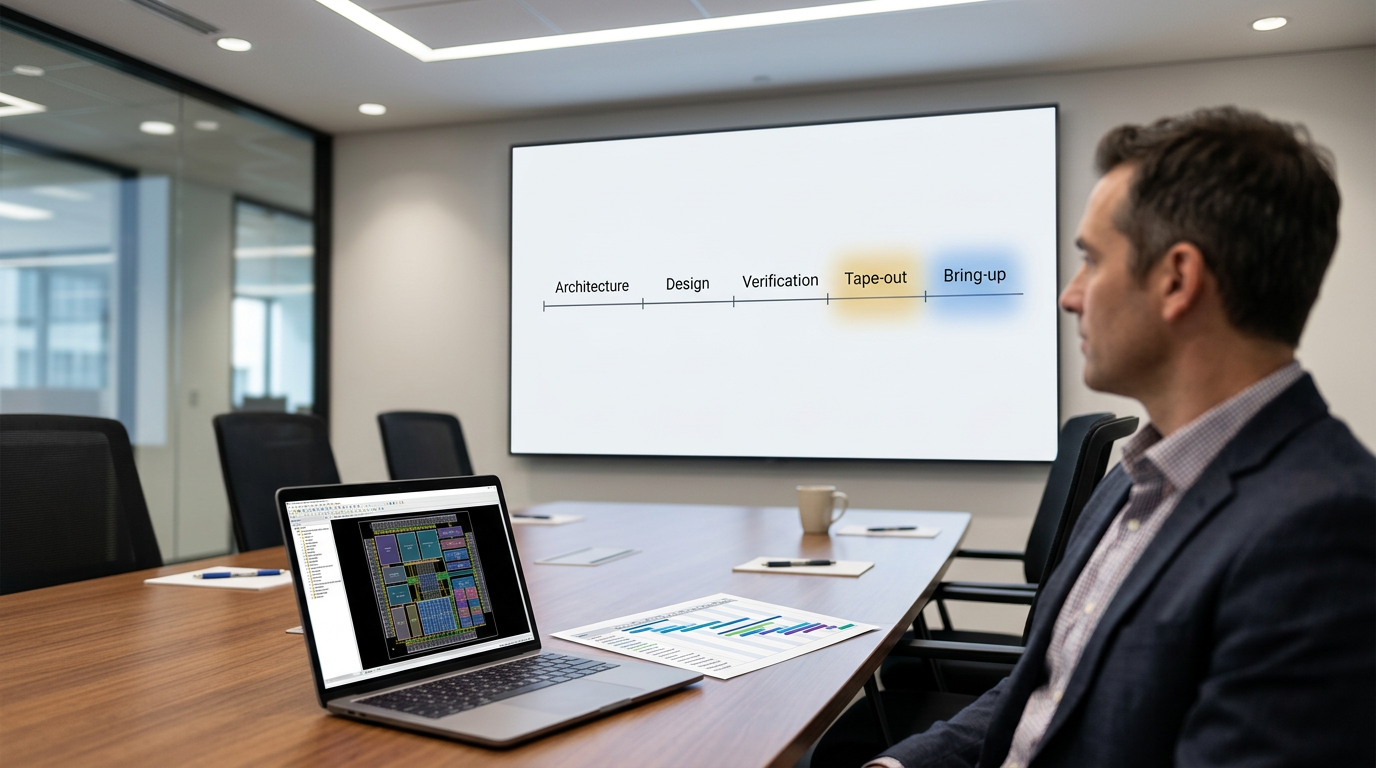
A breakdown of how semiconductor contract staffing works for both hiring managers researching the model and engineers considering contract roles for the first time.

Tapeout schedules are stacking up while chip design teams stay understaffed. Here’s what the 2026 semiconductor talent crunch means for your hiring plan.

Staffing stands out because it is where people, ideas, and growth come together. Here, your curiosity becomes momentum, and the connections you make can shape your entire career. For those just starting, staffing is a meaningful first step. You are not waiting for responsibility. You step directly into work that builds new skills and places you at the center of decisions that matter. From day one, you gain visibility, ownership, and opportunities to contribute. The foundation you build continues to expand with every experience. If you want a career that moves fast, develops you quickly, and surrounds you with opportunity, staffing is the strong start your career deserves.

Learn how engineering leaders turn quiet markets into a hiring advantage by partnering early with specialized staffing firms for ready-to-deploy technical talent.

The calm before the climb After four consecutive weeks of stability, the U.S. Staffing Index has edged up to 81. This may seem like a modest change on paper, but it sends a meaningful signal beneath the surface. A one-point rise may not make headlines, yet it reflects quiet momentum building across the market. Recent data from Bullhorn’s Staffing Industry Indicator shows continued steadiness across the professional workforce. Year-over-year numbers appear slightly softer because last year’s fourth quarter was unusually active. However, the key metrics reveal a different story. Hours worked remain consistent, and projects that were previously paused are gradually being reactivated. For those contracting through this environment, this steadiness signals more than just stability. It marks a subtle but important shift in posture. When companies continue to deliver without expanding their teams, it suggests that workloads are mounting beneath the surface. This underlying tension eventually creates an opening for experienced technical professionals to step in and accelerate delivery. What may look like a plateau is actually a period of preparation. It is the pause before the pace quickens. Reading Between the Rates SIA’s September U.S. Pulse Survey adds depth to this picture. Of the 158 firms surveyed, 21% reported client delays or paused projects, resulting in longer lead times and greater uncertainty about active roles. For candidates, this means slower feedback and extended decision cycles. This is not a lack of opportunity; rather, it is a sign of cautious prioritization. Across engineering and other technical sectors, however, steady activity continues. Companies are refocusing their efforts, channeling resources toward core initiatives and mission-critical systems instead of retreating. While the pace of new work may feel restrained, the persistence of ongoing projects demonstrates that the need for technical execution remains strong. For technical professionals, this period is less about scarcity and more about selectivity. Organizations are fine-tuning which roles move forward and carefully choosing the partners they trust to fill them. This creates an advantage for contractors who can adapt quickly, work across disciplines, and bring specialized skills that align with efficiency, automation, and delivery goals. In short, the quiet in the market is strategy in motion. It favors those who are ready to respond with precision. Reading the Quiet Market In quieter markets, the most critical signals often go unnoticed. Paused projects and extended approval timelines might appear to signal a slowdown, but they frequently point to areas where investment is quietly building. While some companies hesitate to launch new initiatives, the demand for technical expertise does not disappear. It simply becomes more focused. This is the time to give you a heads-up that you can strengthen your position. Rather than chasing volume, take time to refine your story. Update certifications, refresh your profile, and reconnect with recruiters who understand your strengths and long-term goals. Staying visible now ensures that, when projects start moving again, you are already at the top of the list. Think of this phase as reconnaissance, not retreat. Behind the scenes, teams are reshaping budgets, reprioritizing backlogs, and quietly reopening paused work. Those who stay connected to strong recruiter networks will be the first to hear when the momentum shifts and the first to move when it does. Moving When the Market Blinks Periods of calm often disguise the start of acceleration. Change rarely comes with fanfare. It begins with subtle signs such as more meeting requests, shifting project timelines, or a sudden increase in recruiter outreach. The Staffing Industry Indicator may be holding steady at peak 2025 levels, but history shows these plateaus are temporary. Once pressure builds, companies act quickly. Right now, partnership with recruiters is not just about waiting for leads. It is about staying close to the pulse of movement already underway. Recruiters notice the early signals of change, including contract renewals, pilot launches, and reactivated projects that point to new demand. Contractors who maintain these connections are not waiting for the market to move. They are already aligned with it. If things feel still, take it as your moment to recalibrate. Update your portfolio, refine your preferences, and make sure your recruiter knows your next goals. In this environment, momentum does not mean constant motion. It means being ready to move the moment opportunity reappears.

Learn how strong communication accelerates engineering projects and how Game 7 recruiters assess these skills to help you hire engineers who keep projects moving.

Four ways top engineers build their reputations; through active listening, clear communication, solution-oriented thinking, and cross-team collaboration.