
Hardware Engineers
Board Hardware Engineers from Schematic to Bring-Up
PCB layout engineers route a finished schematic. Hardware engineers build that schematic from requirements. Power tree, memory topology, connector pinout, and functional spec.
What they do
Board Architecture from Requirements Through Pilot Build
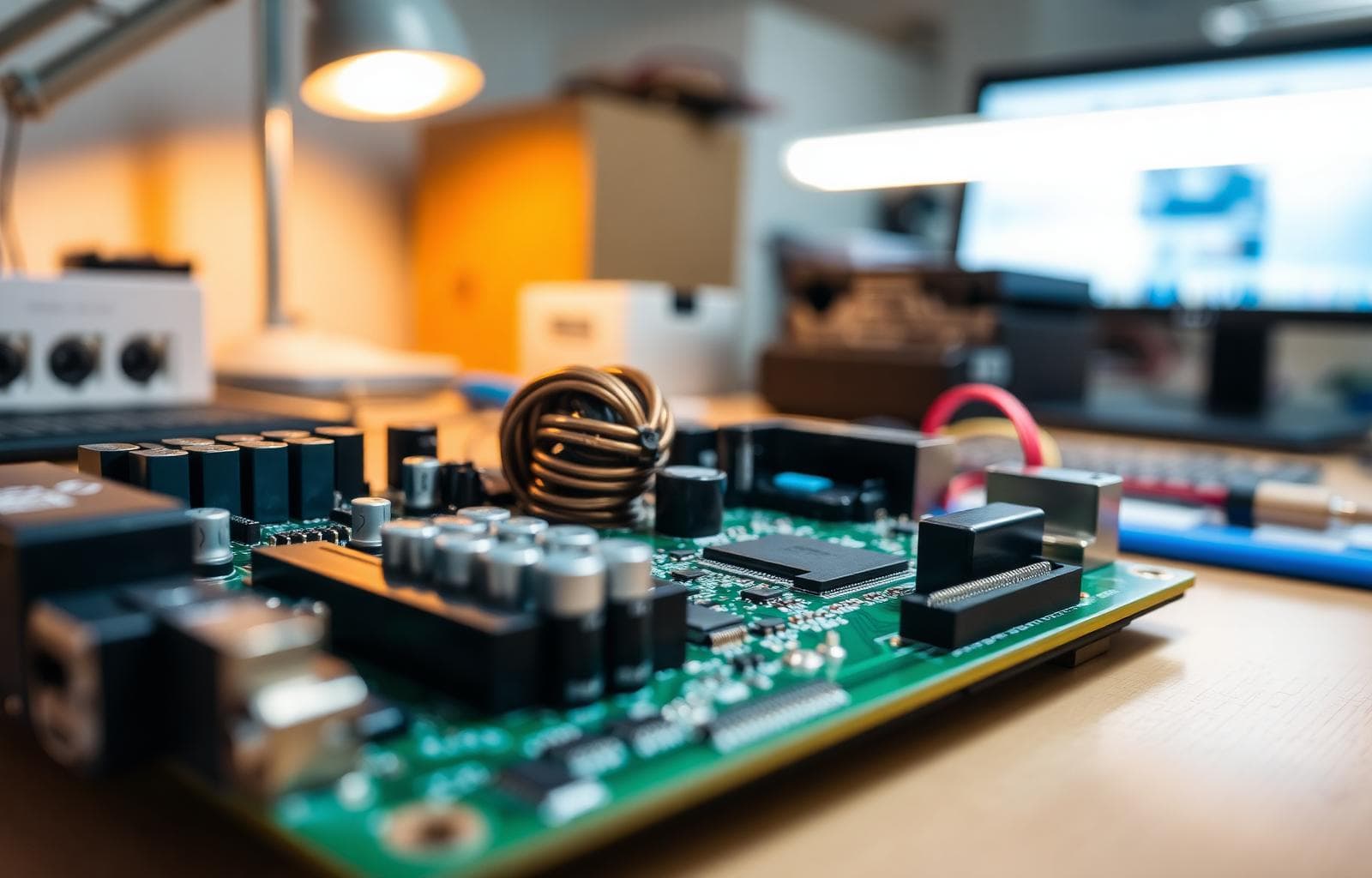
Hardware engineers at Game 7 own the board from blank schematic to functional prototype. Selecting the processor, specifying the DDR memory topology, designing the power tree, defining the connector pinout, and writing the functional requirements the layout engineer implements.
Our placements span d-Matrix, Bascom Hunter, LAM Research, and Northrop Grumman. Covering semiconductor validation platforms, high-performance compute, and defense programs.
Scope of work
- System-level schematic capture: processor, memory, power, and high-speed interface circuit design
- Component selection and BOM management: supply chain risk assessment and alternate sourcing
- Power architecture design: multi-rail PDN, switching and linear regulation, and battery management
- High-speed interface design: DDR5, PCIe Gen5, 100G+ Ethernet, and MIPI interface schematics
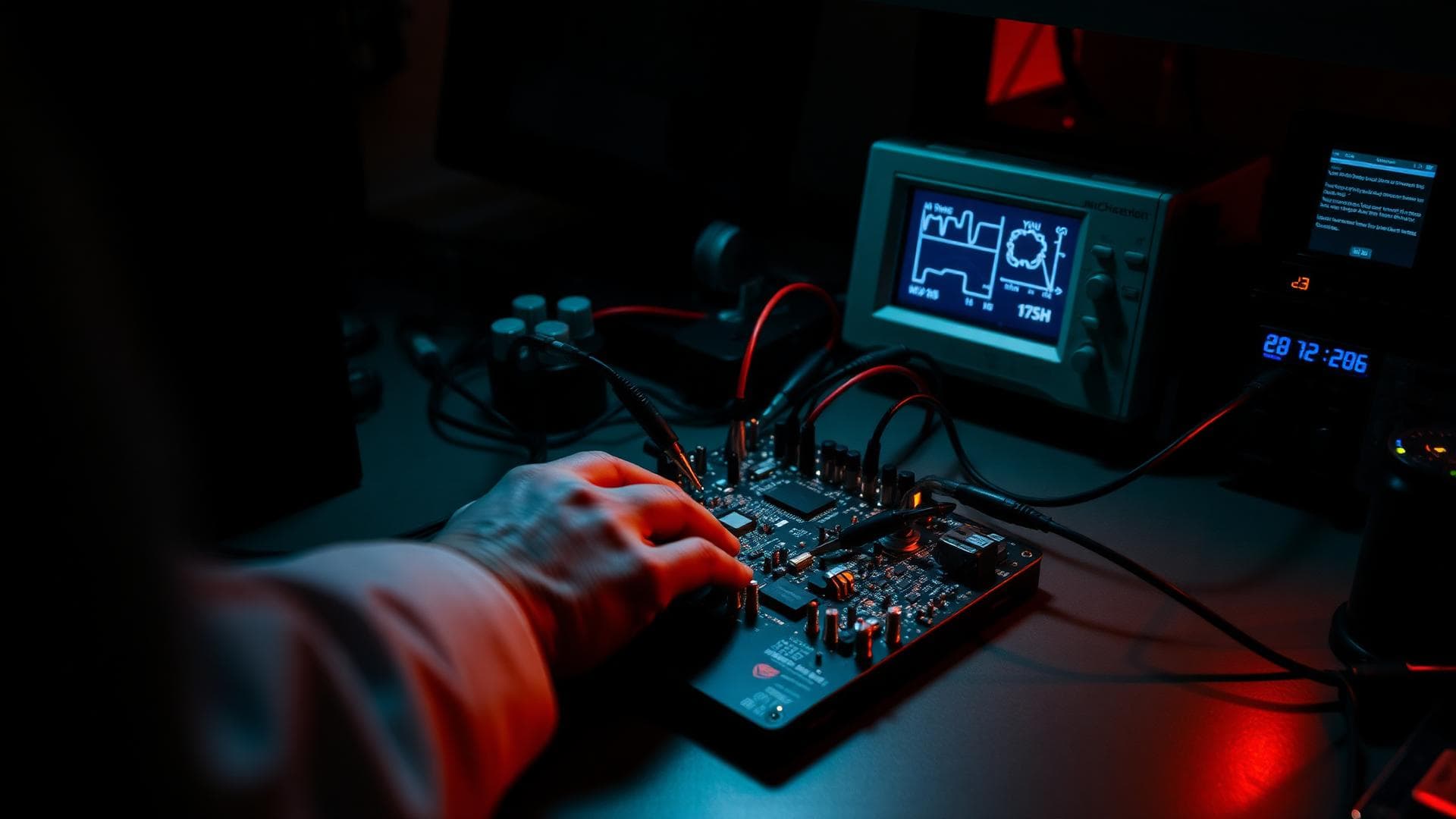
- Prototype bring-up, debug, and functional validation across power, signal, and interface domains
- EMC/EMI strategy: filtering, shielding, ground plane architecture, and pre-compliance test coordination
- Thermal and mechanical co-design: heat sink selection, TDP budgeting, and enclosure fit
- NPI (New Product Introduction) engineering: DFM review, pilot build support, and production test fixture design
Tools & Technologies
The stack our Hardware Engineers actually ship in.
Program context
Broader Than Layout: Schematic Through Functional Prototype
PCB layout engineers take a finished schematic and place and route the board. Hardware engineers build that schematic from requirements: they select the processor, specify the DDR memory interface topology, design the power tree, choose the regulators and passives, define the connector pinout, and write the functional requirements that the layout engineer implements. For complex boards. Semiconductor validation platforms, high-performance compute modules, industrial controllers. This is months of engineering work before a single trace is routed.
FAQ
Common Questions on Hardware Engineers Staffing
What's the difference between a hardware engineer and a PCB layout engineer?+
A hardware engineer designs the circuit. They own the schematic, the component selection, the power delivery network architecture, and the interface signal topology. A PCB layout engineer takes that schematic and physically implements it on the board. The division varies by company: some organizations combine both roles; others maintain strict separation. For programs where the schematic is already complete and validated, a dedicated layout engineer is sufficient. For programs that start from requirements, a hardware engineer is the right hire.
What does semiconductor validation board hardware engineering look like?+
Semiconductor validation boards. Designed to bring up and characterize a new ASIC or SoC before it ships in a production platform. Are among the most technically demanding hardware engineering programs. The hardware engineer designs around a chip that is not fully characterized yet, accommodates extensive test access (test points, scope-friendly probe pads, debug connectors), supports multiple power states and clock frequencies under active measurement, and often builds 5 to 20 units rather than tens of thousands. The design-for-bring-up mindset is fundamentally different from design-for-production.
Can Game 7 place hardware engineers for power delivery and PDN design specifically?+
Yes. Power Delivery Network (PDN) design. The architecture of how power gets from the input supply to every chip on the board at the correct voltage with acceptable noise. Is increasingly a specialized skill as switching frequencies rise, process node sensitivity to supply noise increases, and power budgets tighten. For boards with dozens of power rails, high-current switching regulators, and strict PSRR requirements on sensitive analog circuitry, PDN design is a program risk if not staffed correctly.
How does NPI engineering fit into hardware program staffing?+
New Product Introduction (NPI) engineering bridges the gap between prototype and production: DFM review with the PCB fab and assembly house, first article inspection, component qualification, production test fixture design, and pilot build support. NPI engineers prevent the expensive loop where a board that works in the lab fails in volume manufacturing because of assembly tolerances that were not designed for. For programs transitioning from validation to pilot production, a dedicated NPI engineer is a high-leverage hire.
Related disciplines
Cross-Links Across the Team
High-Speed PCB Layout Engineers: DDR5, SerDes, RF
Layout specialists who implement the hardware engineer's schematic.
Electrical & Hardware →Electrical Engineers for Power Delivery, Board Validation, and Signal & Power Integrity
Electrical engineers who close PDN, SI/PI, and board validation.
Silicon Validation →Post-Silicon Validation Engineers
Post-silicon validation engineers who depend on well-instrumented validation boards.
Let's talk
Need a Hardware Engineer?
Tell us the program. We'll send a shortlist of 2-4 qualified engineers within days.